Questions? 800-523-5874 | [email protected]
- Prepmaster™ Specimen Preparation Robot
- TEM Grids
- TEM Window Grids
- Omniprobe Nanomanipulation Systems
- K-kit Wet "Liquid" TEM Kit
- Specimen Mounts
- SEM Specimen Holders
- Index and Finder SEM Grids
- SEM for Forensics
- SEM Sample Preparation Station Materials
- Cryogenic Personal Protection Equipment
- Cryo Dewars & Flasks
- Cryogenic Grids & Accessories
- Cryogenic Vials & Racks
- Cooling Chambers & Ice Baths
- Prepmaster™ Specimen Preparation Robot
- Laboratory Microwave Ovens
- LYNX II Automated Tissue Processor
- EMS Poly III
- Microtomes
- Tissue Slicers
- Rapid Immersion Freezer
- Heaters & Chillers
- SEM Cooling Stage
- Glow Discharge Systems
- Sputter Coaters & Carbon Coaters
- Stages
- Freeze Dryers
- Critical Point Dryers
- Cryo-SEM Preparation System
- Specimen Transfer Systems
- Decontaminators
- Desiccators
- Centrifuges
- Dry Baths
- Stirrers, Hot Plates
- Vortexers & Magnetic Mixers
- Rotators & Rockers
- Ovens & Incubators
- Vibration Isolation
- Air Sampling
- Vacuum Pumps
Filters
Filter by attributes
- Color
- Hazard
- Ice
- Overnight Shipping Only
- Shelf Life
Filter by manufacturer
Embedding Media Kits
Technical Tips: General Tips for Embedding Media Kits
- Epoxy Resins: Problems, Causes, and Solutions
- Storage of Embedding Resin Mixtures
- Preparation of Embedding Mixtures
- DMP-30 and DMAE VS. BDMA
*Please note that wherever DMP-30 is listed as the accelerator in our embedding media kits you have the option to use BDMA in place of it. BDMA is less viscous, has a longer shelf life, and offers better penetration (it should be noted, however, that in order to achieve the optimum results when using BDMA in place of DMP-30 you must vary the amount. DMP-30: 1.5-2%; BDMA: 2.5-3%).
Sort by
Product Name
Ordering Info

Araldite 502
Araldite 502 Luft's Formula. Polymerization takes place overnight so blocks can be sectioned the next day.
| Storage | Cat # | Description | MSDS | Pack | Price | Quote | Quantity | |
|---|---|---|---|---|---|---|---|---|
| Storage:RT | Cat #: 13900 | Description: Araldite 502 Kit | MSDS | Pack: Kit | Price: $57.00 |
Add to Quote:

|
|
Araldite 6005
Also known as American Araldite. The blocks are slightly harder than those produced by Araldite 502.
| Storage | Cat # | Description | MSDS | Pack | Price | Quote | Quantity | |
|---|---|---|---|---|---|---|---|---|
| Storage:RT | Cat #: 13920 | Description: Araldite 6005 Kit | MSDS | Pack: Kit | Price: $59.50 |
Add to Quote:
|
|
Araldite, Embed 812
Araldite, (Epon-812), Mollenhauer Epon-Araldite Formula. For hard blocks and high image contrast. Blocks are easily sectioned.
| Storage | Cat # | Description | Pack | Price | Quote | Quantity | |
|---|---|---|---|---|---|---|---|
| Storage:RT | Cat #: 13940 | Description: Araldite/Embed Kit | Pack: Kit | Price: $82.50 |
Add to Quote:
|
|
DER 332-732
Three different mixtures: one for relatively soft blocks, another for harder blocks for collagenous tissue, and a tougher one if required.
| Storage | Cat # | Description | Pack | Price | Quote | Quantity | |
|---|---|---|---|---|---|---|---|
| Storage:RT | Cat #: 14000 | Description: DER 332/732 Kit | Pack: Kit | Price: $68.00 |
Add to Quote:
|
|
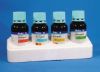
Durcupan™ (Water Soluble)
A water soluble embedding medium for EM based on an aliphatic polyepoxide. A Fluka A.G., Buchs. Switzerland-Registered Trademark. Kit 260g for a minimum of 10 embeddings.
| Storage | Cat # | Description | MSDS | Pack | Price | Quote | Quantity | |
|---|---|---|---|---|---|---|---|---|
| Storage:RT | Cat #: 14022 | Description: Component B | MSDS | Pack: Each | Price: $286.00 |
Add to Quote:
|
|
Durcupan™ ACM Epoxy
An aromatic polyepoxide; a colorless resin of relatively low viscosity, with virtually no shrinkage.
| Storage | Cat # | Description | MSDS | Pack | Price | Quote | Quantity | |
|---|---|---|---|---|---|---|---|---|
| Storage:RT | Cat #: 14040 | Description: Durcupan™ Acm Epoxy Resin | MSDS | Pack: Kit | Price: $653.00 |
Add to Quote:
|
|
|
| Storage:RT | Cat #: 14041 | Description: Component A/M Resin | MSDS | Pack: 100 mL | Price: $97.50 |
Add to Quote:
|
|
|
| Storage:RT | Cat #: 14042 | Description: Component B Hardener | MSDS | Pack: 100 mL | Price: $89.00 |
Add to Quote:
|
|
Diethylene Glycol Distearate (DEGDS/DGD)
Diethylene Glycol Distearate (DEGDS/DGD), a removable embedding medium (for thin and thick sections) provides embedment free sections. Good for immunolabeling and high resolution LM. Kit: 450ml each DGD, Ethanol, n-Butyl alcohol.
| Storage | Cat # | Description | Pack | Price | Quote | Quantity | |
|---|---|---|---|---|---|---|---|
| Storage:RT | Cat #: 14010 | Description: Dgd Embedding Kit | Pack: Kit | Price: $214.00 |
Add to Quote:
|
|
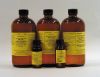
EMbed 812 Embedding Kit
Replacement for the discontinued Epon-812. Produces the same results in terms of preservation, handling, sectioning, and staining as the old Epon-812.
| Storage | Cat # | Description | MSDS | Pack | Price | Quote | Quantity | |
|---|---|---|---|---|---|---|---|---|
| Storage:RT | Cat #: 14120 | Description: Embed 812 Embedding Kit With Dmp-30 | MSDS | Pack: Kit | Price: $95.50 |
Add to Quote:
|
|
|
| Storage:RT | Cat #: 14121 | Description: Embed 812 Embedding Kit With Bdma | MSDS | Pack: Kit | Price: $99.50 |
Add to Quote:
|
|
EMbed 812 / DER 736 Embedding Kit
This mixture is less viscous than the final embedding mixture of EMbed-812. Kit consists of:, 2x225ml DER 736, 450ml EMbed-812, 450ml NMA, *50ml DMP-30.
| Storage | Cat # | Description | Pack | Price | Quote | Quantity | |
|---|---|---|---|---|---|---|---|
| Storage:RT | Cat #: 14130 | Description: Embed 812/DER 736 | Pack: Kit | Price: $89.00 |
Add to Quote:
|
|
EMS Petrographic Epoxy
EMS Petrographic Epoxy is the only epoxy based mounting medium with a refractive index of nd=1.540±0.001. This is ideal for general petrography, aiding in distinguishing between feldspars.
| Cat # | Description | MSDS | Pack | Price | Quote | Quantity | |
|---|---|---|---|---|---|---|---|
| Cat #: 1292-00 | Description: EMS Petrographic Epoxy - Evaluation Kit | Pack: Kit | Price: $36.00 |
Add to Quote:
|
|
||
| Cat #: 1292-01 | Description: EMS Petrographic Epoxy - Basic Kit | Pack: Kit | Price: $235.50 |
Add to Quote:
|
|
||
| Cat #: 1292-02 | Description: EMS Petrographic Epoxy - Standard Kit | Pack: Kit | Price: $303.00 |
Add to Quote:
|
|
||
| Cat #: 1292-03 | Description: EMS Petrographic Epoxy - Standard Kit &Thermometer | Pack: Kit | Price: $361.50 |
Add to Quote:
|
|
||
| Cat #: 1292-B | Description: EMS Petrographic Epoxy - Blue Dye | MSDS | Pack: 10 g | Price: $24.50 |
Add to Quote:
|
|
|
| Cat #: 1292-R | Description: EMS Petrographic Epoxy - Resin Only | MSDS | Pack: 500 mL | Price: $263.00 |
Add to Quote:
|
|
|
| Cat #: 1292-C | Description: EMS Petrographic Epoxy - Curing Agent | MSDS | Pack: 50 mL | Price: $49.00 |
Add to Quote:
|
|
|
| Cat #: 1292-T | Description: EMS Petrographic Epoxy - Surface Thermometer | Pack: Each | Price: $70.00 |
Add to Quote:
|
|
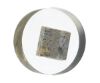
Epo-Fix
Epoxies have the lowest shrinkage of cold mounting resins. Curing time is relatively long, but the adhesion is excellent. Used for vacuum impregnation. The hardened epoxy is duroplastic.
| Storage | Cat # | Description | MSDS | Pack | Price | Quote | Quantity | |
|---|---|---|---|---|---|---|---|---|
| Storage:RT | Cat #: 1232 | Description: Epofix | MSDS | Pack: Kit | Price: $221.50 |
Add to Quote:
|
|
|
| Storage: | Cat #: 1245 | Description: Epoxy-Dye, 20G | MSDS | Pack: 20 g | Price: $108.00 |
Add to Quote:
|
|
|
| Storage: | Cat #: 1232-H | Description: Epofix Hardenening Liquid Only | MSDS | Pack: 250 mL | Price: $60.50 |
Add to Quote:
|
|
Gach Kit
A water and lipid-retaining embedding polymer for EM. Excellent preservation of lipids and ultrastructure. Kit consists of: 10x10ml 50% EM grade Glutaraldehyde, 10 10x1.5g Carbohydrazide
GMA-PEG Embedding Kit Polyethylene Glycol- Glycol methacrylate mixture.
Polyethylene Glycol: Glycol methacrylate mixture. Consists of:, 450ml Glycol methacrylate, GMA, 225ml n-Butyl methacrylate, 50ml Ethylene glycol dimethacrylate, 15g Benzoyl Peroxide Paste, 20ml Polyethylene Glycol 400
| Storage | Cat # | Description | MSDS | Pack | Price | Quote | Quantity | |
|---|---|---|---|---|---|---|---|---|
| Storage:RT | Cat #: 14250 | Description: Gma-Peg Embedding | MSDS | Pack: Kit | Price: $63.50 |
Add to Quote:
|
|
Hard-Plus Resin-812
Hard-Plus Resin-812 is a newly formulated resin that enables the processing of specimens that have a tendency to wrinkle and be problematic. Premix kit with five separate mini-kits, making approximately 100g each.
| Cat # | Description | MSDS | Pack | Price | Quote | Quantity | |
|---|---|---|---|---|---|---|---|
| Cat #: 14115 | Description: Hard Plus Resin-812 Kit | MSDS | Pack: Kit | Price: $163.00 |
Add to Quote:
|
|
HPMA Embedding Kit
HPMA is a water-soluble resin used for cytochemical applications. Infiltration follows fixation of the tissue so there is no extraction of materials caused by dehydration in alcohols. Kit: 450ml HPMA, 15g Benzoyl Peroxide Paste.
| Storage | Cat # | Description | Pack | Price | Quote | Quantity | |
|---|---|---|---|---|---|---|---|
| Storage:RT | Cat #: 14220 | Description: HPMA Embedding | Pack: Kit | Price: $58.50 |
Add to Quote:
|
|
JB-4® Mini Embedding Kit
Water soluble embedding media based on Glycol Methacrylate for high resolution microscopy samples. The catalyzed monomer acts as dehydration and infiltration agent.
| Storage | Cat # | Description | MSDS | Pack | Price | Quote | Quantity | |
|---|---|---|---|---|---|---|---|---|
| Storage:RT | Cat #: 14270-M | Description: Jb-4™ Mini Embedding Kit | MSDS | Pack: Each | Price: $105.00 |
Add to Quote:
|
|
JB-4® Embedding Kit
Water soluble embedding media based on Glycol Methacrylate for high resolution microscopy samples. The catalyzed monomer acts as dehydration and infiltration agent.
| Storage | Cat # | Description | MSDS | Pack | Price | Quote | Quantity | |
|---|---|---|---|---|---|---|---|---|
| Storage:RT | Cat #: 14270-00 | Description: Jb-4 Embedding | Pack: Kit | Price: $464.50 |
Add to Quote:
|
|
||
| Storage:RT | Cat #: 14270-01 | Description: Jb-4 Solution A | MSDS | Pack: 800 mL | Price: $379.50 |
Add to Quote:
|
|
|
| Storage:RT | Cat #: 14270-04 | Description: Jb-4 Solution B | MSDS | Pack: 30 mL | Price: $60.50 |
Add to Quote:
|
|
|
| Storage:RT | Cat #: 14270-06 | Description: Jb-4 Catalyst | MSDS | Pack: 12 g | Price: $60.50 |
Add to Quote:
|
|
JB-4 Plus® Embedding Kit
JB-4 Plus offers the same features as JB-4 but it produces less of an exothermic reaction. This is good for temperature sensitive tissues.
| Storage | Cat # | Description | MSDS | Pack | Price | Quote | Quantity | |
|---|---|---|---|---|---|---|---|---|
| Storage:RT | Cat #: 14272-00 | Description: Jb-4 Plus Embedding | Pack: Kit | Price: $345.50 |
Add to Quote:
|
|
||
| Storage:RT | Cat #: 14272-01 | Description: Jb-4 Plus Solution A | MSDS | Pack: 500 mL | Price: $253.50 |
Add to Quote:
|
|
|
| Storage:RT | Cat #: 14272-04 | Description: Jb-4 Plus Solution B | MSDS | Pack: 15 mL | Price: $74.00 |
Add to Quote:
|
|
|
| Storage:RT | Cat #: 14272-06 | Description: Jb-4 Plus Catalyst | MSDS | Pack: 8 g | Price: $54.00 |
Add to Quote:
|
|
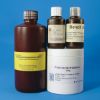
LR Gold Resin
Used with unfixed tissues allowing fixation-sensitive procedures to be carried out in 1-4 um resin sections at -25°C. Non-toxic and low viscosity.
| Storage | Cat # | Description | MSDS | Pack | Price | Quote | Quantity | |
|---|---|---|---|---|---|---|---|---|
| Storage:RT | Cat #: 14370 | Description: Lr Gold Embedding Kit | MSDS | Pack: Kit | Price: $454.50 |
Add to Quote:
|
|
|
| Storage:RT | Cat #: 14371 | Description: Lr Gold Resin Only | MSDS | Pack: 500 mL | Price: $251.00 |
Add to Quote:
|
|
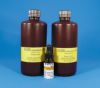
LR White Resin
Very low viscosity (8cps), non-toxic resin. Polar monomer polyhydroxylated acromatic acrylic resin. Cured by heat. Sections of polymerized resin are hydrophilic.
| Storage | Cat # | Description | MSDS | Pack | Price | Quote | Quantity | |
|---|---|---|---|---|---|---|---|---|
| Storage:0-5°C | Cat #: 14380 | Description: Lr White Medium Grade Kit | MSDS | Pack: Kit | Price: $265.00 |
Add to Quote:
|
|
|
| Storage:0-5°C | Cat #: 14382 | Description: Lr White Hard Grade Kit | MSDS | Pack: Kit | Price: $265.00 |
Add to Quote:
|
|
|
| Storage:0-5°C | Cat #: 14381 | Description: Lr White Resin Only, Med Grade Catalyzed | MSDS | Pack: 500 mL | Price: $246.00 |
Add to Quote:
|
|
|
| Storage:0-5°C | Cat #: 14381-UC | Description: Lr White Resin Medium Grade, Uncatalyzed | MSDS | Pack: 500 mL | Price: $250.00 |
Add to Quote:
|
|
|
| Storage:0-5°C | Cat #: 14383 | Description: Lr White Resin Only; Hard Grade Catalyzed | MSDS | Pack: 500 mL | Price: $246.00 |
Add to Quote:
|
|
|
| Storage:0-5°C | Cat #: 14383-UC | Description: Lr White Resin Hard Grade, Uncatalyzed | MSDS | Pack: 500 mL | Price: $250.00 |
Add to Quote:
|
|
|
| Storage:0-5°C | Cat #: 14384 | Description: Lr White Resin Catalyzed Soft Grade | MSDS | Pack: 500 mL | Price: $246.00 |
Add to Quote:
|
|
|
| Storage:0-5°C | Cat #: 14384-UC | Description: Lr White Resin Uncatalyzed Soft Grade | MSDS | Pack: 500 mL | Price: $250.00 |
Add to Quote:
|
|
|
| Storage:0-5°C | Cat #: 14385 | Description: Lr White Accelerator | MSDS | Pack: 10 mL | Price: $38.00 |
Add to Quote:
|
|